Therapists: how to join the network

If you are a therapist and would like to join the FPN, we ask simply that you share our
commitment  to  providing free or very low fee open-ended therapy to people on low incomes. See the statement on the home page of our website. There are then three steps to joining:

1.   Tell us you are a qualified counsellor or psychotherapist, and are registered with a professional body

2.   Send the following details, which will be posted on our directory of therapists, to Andy Metcalf at andymetcalf62@gmail.com

  • Your style of Work…….ie Psychotherapy/Counselling/Couples Work
  • Your qualification/registration… ie UKCP/BACP etc
  • Your postcode
  • Your contact details … email or phone number or both
  • Any other details you would like to mention

After your details are posted, the conditions of the work with a client who contacts you from the FPN  directory (free or a low fee, frequency, holiday breaks, etc)  are for you and the client to negotiate within the frame of your private practice.

3.   When you feel the time is right,  write a brief profile piece explaining why you have come to join the network and what it means to them. Find examples here.

If you have any other questions please do get in touch with Andy Metcalf.

Thanks

Recovery In The Bin – Letter to Luciana Berger

Please take the time to read and support this letter from a User Led Mental Health Activist Facebook Group campaigning for social justice and equality . Attached are the Recovery In The Bin network’s 18 Key Principles, if you wish to know more.

Dear Luciana Berger – Shadow Minister for Mental Health,

We are writing to you to raise our concerns and priorities for Governmental Mental Health care and provision in the UK. We enclose the first of a number of our “position statements” we intend to send to you.

We are a User Led Mental Health Activist Facebook Group campaigning for Social Justice and Equality in MH care and practice, with a focus on critiquing and challenging mainstream ‘recovery’ ideology. At the time of writing our membership stands at 474 and this is growing by the day.

We believe ‘recovery’ has been colonised by MH services, commissioners and policy makers. We reject the new neoliberal intrusion on the word ‘recovery’ that has been redefined, and taken over by marketisation language, techniques and outcomes. Some of us will never feel “Recovered” living under these intolerable and inhumane social pressures.

We believe access to quality housing and disability benefits designed for mental health claimants would give people a stable and secure environment to raise their quality of life and health. This would enable efforts towards going back to study, work IF people choose / aspire to this and allowing people to volunteer indefinitely and claim benefits if this improves their quality of life and MH – recognising how valuable this work is to society.

Our first “position statement” is about the Welfare State and Social Housing, and follows this letter.

We will cover the following issues: –

Work Capability Assessment (WCA)

Benefit Sanctions

Personal Independence Payment (PIP)

Employment

Voluntary Work

CBT in Job Centres

Social Housing & Homelessness

We look forward to hearing from you about the matters we have raised.

Yours Sincerely,

Recovery In The Bin

Copy:

Jeremy Corbyn MP and Leader of Labour Party.

John McDonnell MP and Shadow Chancellor.

Owen Smith MP, Shadow Secretary of State for Work and Pensions.

Mental Health Resistance Network.

Social Workers Action Network (SWAN).

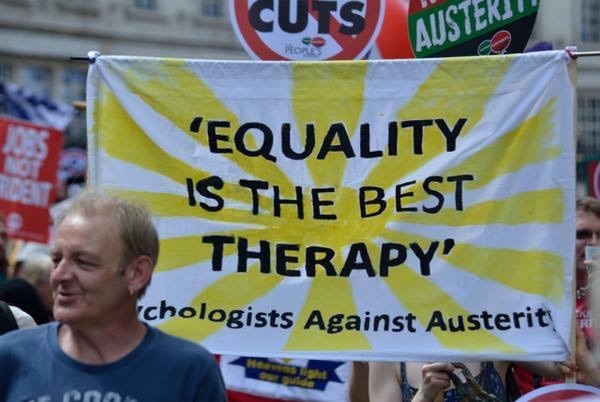
Psychologists Against Austerity.

Critical Mental Health Nursing Network (CMHNN).

Critical Psychiatry Network.

Disabled People Against Cuts (DPAC).

The Peoples Assembly.

Statement on the Welfare State and Social Housing

Work Capability Assessments (WCA)

  • The Work Capability Assessments (WCA) for Employment Support Allowance (ESA) appear to be weighted in favour of those with physical disabilities, and often fails to take into account fluctuating conditions, common to mental distress, such as anxiety and depression.
  • Access to welfare advisors and advocacy workers has been severely reduced due to cuts to funding, services and the legal aid budget.
  • We are aware of a number of deaths related to the “reforms”, including recent reports that a coroner has ruled that the WCA contributed directly to the suicide of a claimant, and that steps need to be taken by the DWP to prevent further such incidents. (The Independent 20.9.2015).
  • We believe the WCA needs to be abolished as a matter of urgency.

Benefit Sanctions

  • Sanctions remove the very means of existence, and as a consequence the related death toll is rising.
  • Those in the ‘Work Related Activity Group’ face huge cuts to their benefits in the near future, even if they manage to avoid being sanctioned.

Personal Independence Payment (PIP)

  • PIP is not MH orientated and self-harm/suicide risk factors have been removed from criteria.
  • MH claimants struggle to obtain the necessary medical evidence because MH services are now short term, and once discharged no specialist reports can be secured.
  • Loss of DLA/PIP to MH claimants who are not in receipt of ESA because they’re doing some part-time work or self-employment will be rendered unable to continue working or plunged into poverty, being under immense pressure to work more hours, which could lead to mental distress and deterioration. 

Employment

  • There are approximately 700,000 vacancies and 2 million (possibly more if you count those who are sanctioned/on Workfare) applying for those 700,000 vacancies, therefore the maths don’t work here.
  • It’s evidenced that Workfare doesn’t work and only provides massive profits to private companies using public funds and plunges more people into sanctions/food banks.
  • MH claimants have been and are being targeted as the ‘low hanging fruit’ (their description) in the full knowledge that MH (and Learning Difficulties) has the lowest employment rates.
  • Temporary and zero contract hours shift work is evidenced as being bad for anyone’s mental (and physical) health, but this looks set to become more common for MH claimants who are at threat of sanction/workfare.

Voluntary Work

  • We often carry out highly valued long term voluntary work within Trusts, University’s and Charities, so chosen voluntary work (with appropriate evidence) needs to be considered as an additional outcome to employment, as for some people that’s the most ‘doable’, maintaining the best ‘stability’.
  • Voluntary work gives a person greater flexibility, and provides less pressure to paid work when s/he is not feeling up to it.
  • MH claimants have had benefit claims stopped/reviewed for doing voluntary work (even when organised by own MH Trust & MH professionals have had to intervene by advocating that it’s part of their treatment).

Cognitive Behavioural Therapy (CBT) in Jobcentres.

  • We believe getting back to work, especially after many years of unemployment, due to MH complexities, is unlikely to be resolved by a “quick fix” such as CBT.
  • Many of these initiatives are being piloted in Labour controlled authorities. For example, in June 2015, Service Users protested outside the Streatham Job Centre, which had been identified as a site for trialling the introduction of CBT inside Job centres.

Social Housing & Homelessness

  • Some Councils/Housing Associations are losing over 90% of their stock, and letting agencies/private landlords don’t want tenants on housing benefit. This is a significant factor with respect to the increasing levels of homelessness that should not be acceptable for any Government.
  • Very vulnerable mentally distressed people are ending up sleeping rough because of refusal to join groups in high support mental health housing, which means they have refused an offer of housing and are deemed voluntarily homeless.

The privatisation of mental health: how good services are turning in favour of the rich

by Elizabeth Cotton, Middlesex University

The Care Quality Commission, the independent regulator of all health and social care services in England, recently produced a sobering report about the crisis in mental health services, with A&E staff attitudes bearing the brunt of criticism about failed care.

However, the Guardian’s recent ClockOff survey found that those working in health are the most stressed in public service – 61% say they are stressed all or most of the time.

Mental health has always been the poor cousin in public services and these reports are not about failures of individual compassion or positive thinking, but the impact of precarious work on all of our states of mind.

Take the psychotherapy profession. A 2015 report about a deterioration in public psychotherapy provision found there had been a 77% increase in complex cases, yet 63% of clients reported that NHS therapy was too short to do any good.

Insecure jobs and the growth of contract and agency labour, unwaged labour, and the retreat into private practice are linked to changes happening in the NHS that have left a fragmented and confused system of healthcare that even the leadership finds difficult to manage.

Rise of the agency

The advent of agencies is nothing new in healthcare but with the massive rise in demand for mental health services, NHS cuts and the waiting lists of between six and 18 months for talking therapies, we are now seeing the creation and expansion of private contractors and employment agencies for therapists. Because of the intense insecurity of agency work and the fear of blacklisting of individual therapists, professionals don’t want to talk about this growth of third parties in mental health and, as a result, not much is known about them.

The growth of contract and agency labour is part of a national campaign to downgrade mental health services. Under the NHS’s Increased Access to Psychological Therapies (IAPT) the main bulk of services are low intensity “well-being” programmes, based on a diluted model of Cognitive Behavioural Therapy. This service is delivered by “psychological well-being practitioners” (PWPs), a formalised and standardised role with intense targets of eight to ten satisfied clients a day. Under this system, if a patient does not pick up the phone for an initial assessment within the allotted 15-minute time period they are referred back to their GP, presumably to wait for a further six months.

Running out of time for mental health?
‘from www.shutterstock.com’

This model of well-being, to be clear, can under no description be considered as therapy. Although most of the people working as well-being practitioners are highly qualified, their job is not to provide a space where patients can actually say what is on their mind. The work is scripted and always leads to one compulsory outcome which is that everyone feels well. Those who offer more support, mainly through giving more time and going off-script, are forced to keep this secret from employers because it breaks their contract of employment, leaving them to carry the full ethical and clinical consequences of their interventions.

To add insult to injury, tucked away in the 2015 budget is the proposal that increased access to psychological therapies should be introduced to 350 job centres in the UK. It’s a psychologisation of poverty, where unemployed people are forced by precarious PWPs to internalise a global economic and social crisis. In this scenario its hard to imagine who needs the most help, the client or the clinician.

A growing percentage of such services are provided by contractors and labour agencies who are literally buying up the growing NHS waiting lists. As with all externalised employment relations, it is not just the contract of employment that gets passed over to third parties, it is also the responsibilities of employers.

Internships and honorary psychotherapists

The most important part of your training as a psychotherapist, along with your own personal therapy, is to carry out clinical work. In order to train as an adult psychotherapist and become an accredited member of a professional body you have to work part-time, usually one to three days a week for between four to eight years.

The problem is that trainees are not paid. There is currently no comprehensive data on how many psychotherapists work unwaged as “honoraries”, but with an estimated 6,000 psychotherapists training every year, a conservative estimate is that 2,000 full-time jobs in mental health are covered by unwaged workers. This includes a substantial percentage of the psychotherapists working for the NHS, the big third sector providers such as Mind and many local mental health charities providing clinical and well-being services in the UK.

Professional bodies are complicit in this system of unwaged work leading to the curious situation that the bodies charged with building a sustainable profession are currently not able to do that. If there is a political cause worth fighting for it is to make the demand for our professional bodies to organise a platform to negotiate wages.

There are some who work full time and do the training on top, but like other areas such as the media and arts, it means this profession is open primarily to people from families affluent enough to support them. This is not to say that rich people make worse therapists, but it does raise important questions about class and power.

Turning to private practice

Then there are the therapists employed directly by the NHS. In most cases the days of “permanent” contracts are over, cuts in funding and increasingly short funding cycles mean many jobs are fixed and short term.

Most NHS services are understaffed, particularly in child and adolescent mental health services leading to an emerging gold rush for private contractors and agencies. The insecurity of NHS workers has profound implications for workplace fear, creating cultures where clinicians are reluctant to raise concerns about patient care. Despite the important debate going on now about raising concerns, in the NHS the reality is that precarious workers are unlikely to speak up for fear of victimisation and job loss.

Many experienced psychotherapists have retreated to private practice, unable and unwilling to navigate a broken system. Many make enough money to live, but only having spent most of their working lives in the NHS with their pensions intact. This generation will retire within the next five to ten years leaving behind a whole generation of self-employed practitioners, who will never earn enough to cover the basics of pensions or sick pay. Private practice does offer massively needed services and a careful assessment and referral can make the difference between life and death, but it increasingly means that services are accessed only by those that can afford it.

The current economic argument for mental health services is based on the unacceptable working conditions of thousands of mental health workers. From psychological well-being practitioners, to psychologists in job centres, to the clinicians employed by Maximus and Atos to carry out welfare assessments, working in mental health poses significant risks to both clients and clinicians. As long as psychotherapists are working quietly and diligently under precarious conditions, the NHS as an employer will never respect the people who work for it. In a context of deteriorating mental health services, the fact that psychotherapists are an unorganised and silenced group of public servants is a matter for both professional and personal ethical concern.

This column looks at the reality of our health and care systems from the perspective of those working to deliver services. Please send us your stories from the frontline.

The Conversation

Elizabeth Cotton is Senior Lecturer at Middlesex University.

This article was originally published on The Conversation.
Read the original article.

Group Analysis Therapy – a therapy for our time?

Much of what we know about groups and the power of group therapy we can ascribe to the pioneering work of W.R Bion and S.H Foulkes, during and after the second world war. With this in mind, is it time again, as we did then, to consider group therapy being a therapy of our time? Today, it is not the threat of totalitarian regime from overseas that drives the distress that people feel but a pervasive culture of distilled fear of the “other” proliferate by today’s political classes which permeates the self and instills such anxiety.

Whether it be: ‘The need for austerity’, ‘The war on terror’, the fear of ‘Mass Migration’ or attacks upon the so called ‘scrounging indigenous benefit claimants’. The results are the same – that anxiety is increased, our sense of wellbeing is eroded, relationships suffer and social cohesion is attacked. The threat may not now be now from the Nazi’s, but an enemy that threatens us regardless.

Whilst this fear of the other is perpetuated, it is an uncomfortable truth that narcissistically driven gain, with its associated personality traits, is often afforded the status of being the highest of personal achievements. Conversely, collective, relational or just groups that promote sharing or creative thinking within non-hierarchical, non-financial orientations are given something far less than the status they deserve.

With this in mind, is it time to think about the group and it’s power to both inspire and hold the most intense feelings once again? But also is it time to challenge the individual to think about their personal entitlements, fears and anxieties over and around the other? Perhaps now, such as then, reconnection to group processes is required.

It was S.H Foulkes who gave the greatest trust to the power of the group to hold the most distressed, and in turn gave us the best understanding of the origins of that distress and the processes that underlie it.

For Foulkes and his acolytes, in the early days of ‘Group Analysis’, often it would be group processes rather than individual that would be relied upon most heavily to manage the most distressed. In those days in the Northfield hospital, it was the trauma of war (what we now know as post traumatic shock disorder) that was being treated and it was the group itself that was the main therapeutic medium for that treatment.

To understand how this medium was and is so therapeutically useful, we have to go further into Foulkes’ theories of the individual and the construction of the self. Whilst Foulkes was a classically trained analyst in the Freudian tradition, he had within his theoretical model of ‘Group Analysis’ a radical concept and departure from the orthodoxy of psychoanalysis. This he called ‘The Matrix’- a symbolic and hypothetical web of unconscious communication and meaning that we are all a part of, that permeates and shapes the person from their earliest moments.

The importance of this concept was that he saw individuals not as individuals per se, but as connected to a much wider net of socio-political and psychological process, whereby the individual was influenced and created by the environment and relationships around them. With this, the individual was seen not to communicate solely for themselves but as a ‘nodal point’ of communication for the wider system that included the personal.

In fact, Foulkes struggled so much with the notion of the individual that he thought that distress and neurosis emanated from its very formation. Or as Foulkes himself put it:

The deepest reason why patients………. can reinforce each other’s normal reactions and wear down and correct each other’s neurotic reactions is that collectively they constitute the very norm from which they deviate.  (S.H Foulkes 1948).

Reading Foulkes, we can begin to understand the need for the group and people’s places within it. As the socio-political influences of the day reinforce the need for greater perverse individualism and narcissistic gain, both the individual and the society at large experience greater levels of neurosis, creating a self fulfilling negative feedback loop that feeds and consumes itself equally. For Foulkes, it was only connecting and remaking contact with those larger social processes that alleviated the personal and social neurosis.

In the therapeutic world, perhaps the harshest of criticisms is, rather cruelly, that of ‘denial’. And it is this Foulkes was charged with. Foulkes’ highly positive schema of the individual within groups, reconnected to the matrix that in their individual state they had deviated from and become distressed, was considered far too utopian for some of this contemporaries and followers. It is true to say that Foulkes had no schema for the anti-group or destructive phenomena that occurs in groups. It was perhaps W.R. Bion who could describe more fully the destructive elements within group life and with it present something of a dichotomy in group thinking.

Bion, in his theory of groups, was able to differentiate when groups were working and when they were not. When processes were creative and when they were stuck. Bion described this as the theory of “Basic Assumption Groups”. Using his theory to think about groups, we are able to differentiate when a group is working – engaged in its primary task of overcoming and understanding neurosis – and when it is not – that is, has become a “basic assumption group”. Bion, essentially an analyst trained in the Kleinian school, was able to identify when anxieties were high and the group had fallen into an unconscious defensive position. In such a position, the group relies heavily from within its number on dependency figures, in the unconscious hope that the individual or pair will rescue it from its neurosis. Differently to Foulkes, it was the personal unconscious stimulated by the presence of the group, and the imponderables therein, that inspired the group to amalgamate into a split position and defend against its primary work task.

While personally I find the theory of groups fascinating and could spend far more time exploring than this piece allows, I want to return to the central point that groups are both able to inspire and hold the a strongest of feelings. I asked the question, ”is group therapy a therapy for our time?” And whilst there is obviously no definitive answer to this question, what is important is that therapy in our time should have a way of reflecting on the type of processes that inspire the kind of anxieties that people suffer with and illustrate that their origins are not always from within. Our therapeutic understandings need to be able to place a person in the socio-political context that permeates the individual, and both give an understanding of what inspires anxieties and make conscious how those anxieties come to reside there in the first place.

In addition to this, therapy needs locate us within our own personal potential to split and inspire in us a greater understanding of what influences our splitting. There resides within us an understandable desire for a charismatic leader(s) to rescue us from our most primitive fears, a desire which drives us to project not just the worst of ourselves, but also the best of ourselves into the other – depleting our own internal resources. It is group analysis and group therapy that can most usefully offer this in my understanding.

Lastly, there is a brief point referred to earlier regarding narcissism. I made the point that in our time often what can be described as serious narcissism and self entitlement is celebrated and defended within our society – the banking crisis and the defence of those that maintain it, whilst scapegoating the poor, being the most obvious of the current examples of this. However, in groups it is my experience that narcissistic processes either within a group’s membership or within the therapist themselves remain unchallenged. Actually, group analysis has a unique unfathomable way of both inspiring a person’s narcissistic traits to be present and challenging them when they do. However, that is another paper altogether. But needless to say, the benefits of challenging the cult of narcissism would have far reaching positive outcomes.

I started with a point that what we know about groups was inspired by the need to treat the sufferers of the worst conflicts the world has known. Today, conflict – whist not as explicit as the wars of the 20th century – is waged in ideology and economics as much as conflict with weapons. As such, I believe the group is required to illustrate the processes that underpin the split positions that allows for such sadism, and at the same time acknowledges that, like then, there are many distressed people traumatised by those same processes. Groups are ideal to support and hold the most serious of traumas.

Michael Caton